Contract Pet Food Manufacturing is the process of hiring a specialized producer to develop, make, package, and sometimes distribute pet food for another company. The brand owner supplies the product vision, while the manufacturing partner contributes facilities, equipment, technical staff, and production experience. This arrangement can support dry kibble, wet food, treats, supplements, and customized formulas.
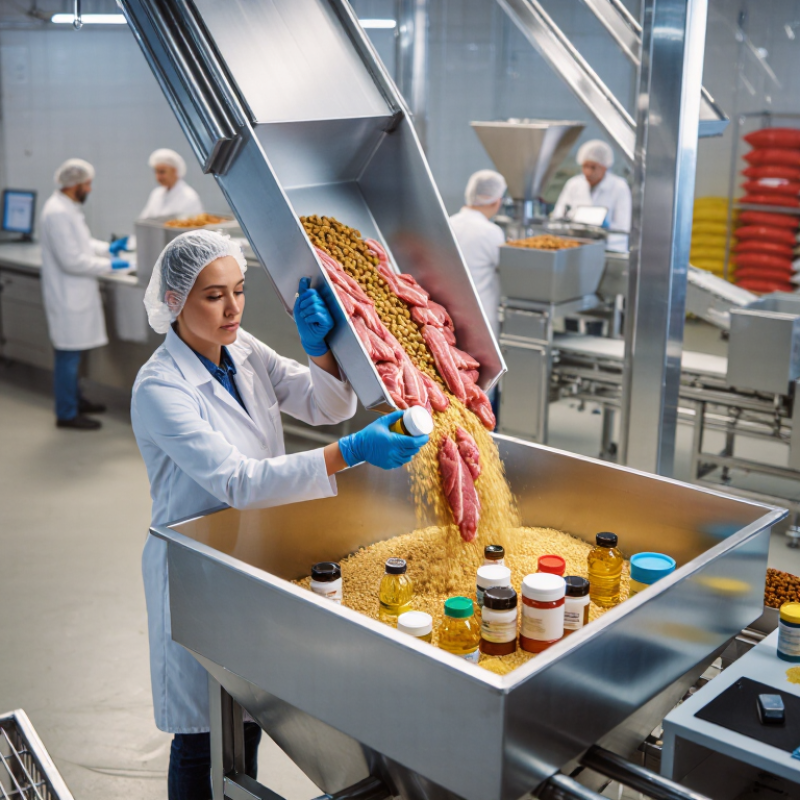
A reliable partner usually manages ingredient sourcing, recipe scaling, batch production, packaging, and quality documentation. In a real facility, this may involve weighing meat, grains, oils, and vitamins before controlled mixing. Samples can then move through laboratory testing, moisture checks, and microbial screening. Clear records matter. They help trace a finished pouch back to its production batch and ingredient suppliers.
The process is more complex than placing a logo on a bag. Formulas must meet nutritional needs for the intended species and life stage. Labels should communicate ingredients, feeding guidance, storage conditions, and product limitations accurately. Experienced manufacturers also use sanitation procedures, allergen controls, supplier assessments, and documented release checks.
The model is not flawless. A rushed product brief can create costly reformulation work. Communication gaps may affect texture, color, or filling weight. These problems are uncomfortable, but they reveal why careful audits and written specifications are essential. Brand owners should examine facility capabilities, testing practices, certifications, production capacity, and complaint-handling procedures before signing an agreement.
Trust develops slowly. Reliable results require evidence, not attractive promises.
What Is Contract Pet Food Manufacturing?
Contract pet food manufacturing means hiring a specialized facility to produce pet food for another company. The hiring company owns the product concept, formula, packaging, or market strategy. The manufacturer manages selected production duties. These duties may include ingredient sourcing, batching, cooking, filling, labeling, and shipment preparation. The arrangement can support dry food, wet food, treats, or customized nutritional formulas.
The APPA 2024 State of the Industry Report valued U.S. pet industry spending at approximately $147 billion in 2023. Pet food remains a major part of that market. This scale increases pressure for consistent quality and reliable supply. A capable manufacturing partner should document supplier approval, batch temperatures, moisture levels, allergen controls, and finished-product testing. Small details matter. A damaged seal can reduce shelf life. An incorrect lot code can complicate product tracing. Certificates of analysis also need careful review, not automatic acceptance.
In practice, product teams compare pilot batches with full-scale production. Texture may change inside a larger mixer. Kibble density can shift during drying. Wet food may need different filling temperatures. These are practical issues, not just technical notes. Independent laboratory testing can verify nutritional and microbiological specifications. However, outsourcing does not remove responsibility from the product owner. A low quoted cost may hide extra testing, storage, or changeover fees. The uncomfortable question is whether the partnership can maintain the same standard during a rushed production week.
Contract pet food manufacturing allows a pet food brand to outsource production activities such as ingredient processing, recipe scaling, packaging, quality control, and regulatory compliance to a specialized manufacturer. The growth of the U.S. pet industry has increased demand for reliable, scalable manufacturing capacity.
Source: American Pet Products Association, U.S. Pet Industry Expenditures. Values are annual U.S. industry expenditures in billions of dollars.
Contract pet food manufacturing is a structured partnership between a product owner and a specialized production facility.
The process begins with a clear brief covering nutrition, target animals, ingredients, texture, pack size, and production volume. Demand is substantial: the APPA 2023–2024 National Pet Owners Survey reported that 66% of U.S. households own a pet. In Europe, FEDIAF’s 2024 facts and figures reported about 139 million pet-owning households. These figures encourage careful planning, not rushed launches.
The manufacturer then reviews the formula and checks whether each ingredient can be sourced consistently. Nutrition specialists may adjust the recipe to meet recognized nutritional profiles and local market requirements.
Small pilot batches test cooking behavior, moisture, smell, texture, and filling accuracy. A practical review matters here. A formula may look perfect on paper but crumble during packing. It happens.
Production normally moves from approved samples to ingredient receiving, blending, thermal processing, drying or cooling, packaging, and final release. The facility should record batch numbers, temperatures, weights, and test results throughout the line.
Quality control continues after production begins.
Laboratories may examine nutrients, moisture, microbiological safety, and shelf-life performance. The Global Pet Food Market report by Euromonitor International has identified premiumization and health-focused products as important category trends, increasing pressure for transparent specifications.
Still, premium language cannot replace evidence.
A strong manufacturer keeps retain samples and investigates deviations instead of hiding them. One weak checkpoint can affect thousands of packs, so corrective action, supplier audits, and documented traceability remain essential.
Contract pet food manufacturing lets a pet food company outsource production while keeping control of its recipe, packaging, and market position. Manufacturers commonly provide ingredient sourcing, formula scaling, cooking, drying, filling, labeling, and batch documentation. Their services may cover dry food, wet meals, treats, or supplements. The strongest partners explain each stage clearly. They do not hide behind technical language.
Services can include pilot batches, nutritional analysis, process validation, quality testing, and shelf-life studies. A reliable facility records temperatures, moisture levels, lot codes, and sanitation results. It should also manage allergen controls and traceability from ingredients to finished cases. During a factory review, ask how deviations are handled. A delayed batch is inconvenient. An unexplained deviation is more serious. No trial is perfect. A mature manufacturer admits limits, investigates causes, and documents corrective action. That honesty may matter more than a polished presentation.
Tips: Request sample quality records before signing an agreement. Confirm who owns the formula and production data. Ask about minimum order quantities, lead times, storage, and recall procedures. Visit the facility if possible. Observe ingredient storage, equipment cleaning, and staff hygiene. Keep product claims accurate and supported by testing. Even experienced teams can overlook small details, such as label changes or moisture variation. Clear communication prevents expensive rework.
What Is Contract Pet Food Manufacturing?
Contract pet food manufacturing means producing pet food to a client’s approved recipe and specifications. The process begins with ingredient selection, not packaging. Animal proteins, grains, fibers, oils, vitamins, and minerals must meet defined quality standards. Suppliers should provide certificates of analysis, allergen information, and traceability records. Small details matter. A rancid oil or inconsistent protein source can affect nutrition, taste, and shelf stability.
Formulation requires more than balancing nutrients on paper. A qualified animal nutritionist considers the pet’s life stage, size, activity, and dietary needs. Processing can change nutrient availability, moisture, texture, and digestibility. Pilot batches help verify whether the formula performs as expected. However, laboratory calculations are not perfect. Palatability, stool quality, and storage results may reveal weaknesses that a spreadsheet misses. That sounds simple.
Quality control continues throughout production. Teams inspect incoming materials, monitor mixing time, check cooking temperatures, and test moisture levels. Finished products may undergo microbiological, nutritional, and oxidation testing. Each batch should have a documented production code and retained sample. These records support traceability when questions arise. In practice, rushed changeovers or unclear instructions can create avoidable errors, so independent checks remain valuable. A reliable facility also reviews complaints, investigates deviations, and adjusts procedures when evidence supports a change.
| Manufacturing Area | Typical Materials or Controls | Purpose in Pet Food Production | Common Verification Methods | Key Quality Indicators |
|---|---|---|---|---|
| Contract Manufacturing Scope | Ingredient sourcing, recipe production, packing, testing, and batch documentation performed under a customer specification. | Allows a pet food company to use an external facility while maintaining defined product, safety, and labeling requirements. | Approved specifications, supplier records, production agreements, and finished-batch release procedures. | Traceability, consistent output, documented responsibilities, and compliance with applicable feed regulations. |
| Animal-Based Protein | Meat, poultry, fish, eggs, or rendered animal protein meals, depending on the recipe and product type. | Provides amino acids and contributes to palatability, texture, and nutritional density. | Supplier approval, identity checks, microbiological testing, moisture analysis, and protein measurement. | Protein level, freshness, species or material identity, pathogen control, and batch consistency. |
| Carbohydrate Sources | Cereals, pulses, tubers, or other approved starch-containing ingredients used according to the formulation. | Supplies energy, supports structure in kibble, and helps control texture and processing performance. | Moisture, mycotoxin, foreign-material, particle-size, and starch-function checks. | Stable moisture, acceptable contamination limits, predictable expansion, and uniform particle size. |
| Fats and Oils | Animal fats or plant-derived oils selected for energy, fatty-acid contribution, and palatability. | Increases caloric density, supports essential fatty-acid delivery, and improves taste. | Peroxide value, free fatty acids, moisture, odor, and storage-condition checks. | Oxidative stability, correct inclusion rate, acceptable odor, and protection from rancidity. |
| Vitamins and Minerals | Premixes containing selected vitamins, minerals, and other permitted nutritional ingredients. | Helps meet the product’s intended nutritional profile when used at accurately calculated levels. | Premix certificate review, batch weighing records, homogeneity testing, and periodic laboratory analysis. | Accurate dosing, even distribution, ingredient stability, and conformity with the approved formula. |
| Functional Ingredients | Fiber sources, prebiotics, probiotics, antioxidants, emulsifiers, binders, or other approved additives. | Supports texture, digestive characteristics, shelf stability, or specific product claims where scientifically justified. | Identity testing, dosage verification, stability studies, and review of permitted-use requirements. | Correct dosage, functional performance, safe use level, and claim substantiation. |
| Recipe Formulation | Target nutrient profile, ingredient specifications, processing limits, feeding stage, and product format. | Converts nutritional objectives into a practical recipe that can be produced consistently. | Nutrient calculations, formulation software review, pilot batches, and palatability or digestibility assessments when applicable. | Nutritional adequacy, manufacturability, cost control, ingredient compatibility, and repeatability. |
| Ingredient Receiving | Approved suppliers, lot numbers, delivery records, sealed packaging, and storage requirements. | Prevents unsuitable or unidentified materials from entering production. | Visual inspection, document review, sampling plans, rapid tests, and quarantine procedures. | Correct identity, intact packaging, acceptable condition, complete records, and traceable lot information. |
| Batching and Mixing | Calibrated scales, controlled ingredient sequence, mixing time, and batch-size limits. | Ensures the intended ingredients and micro-ingredients are distributed evenly throughout the batch. | Weight reconciliation, mixer validation, homogeneity testing, and production-record review. | Accurate weights, uniform mixing, low carryover risk, and complete batch documentation. |
| Thermal Processing | Cooking, extrusion, drying, retorting, or other validated heat-treatment steps appropriate to the product format. | Improves starch functionality, reduces microbial hazards, and creates the desired product structure. | Time-temperature records, moisture and water-activity testing, equipment calibration, and microbial verification. | Validated process conditions, safe moisture level, suitable texture, and controlled nutrient losses. |
| Microbiological Safety | Environmental hygiene, sanitation controls, pathogen monitoring, and hygienic zoning. | Reduces the risk of contamination during ingredient handling, processing, and packing. | Testing for relevant organisms, environmental swabs, sanitation verification, and corrective-action records. | Acceptable pathogen results, effective sanitation, controlled traffic flow, and timely corrective action. |
| Physical Contaminant Control | Screens, magnets, filters, metal detection, X-ray inspection, and equipment-maintenance controls. | Helps prevent metal, stone, glass, plastic, or other foreign material from reaching consumers. | Challenge tests, inspection logs, sieve checks, maintenance records, and incident investigations. | Verified detection sensitivity, intact equipment, documented checks, and effective product hold procedures. |
| Finished Product Testing | Moisture, water activity, crude protein, crude fat, fiber, ash, microbiology, and other specification tests. | Confirms that each batch matches the approved product specification before release. | In-house testing, accredited laboratory analysis, retained samples, and certificate-of-analysis review. | Conformance to nutrient, safety, physical, sensory, and shelf-life requirements. |
| Packaging and Label Control | Food-grade packaging, approved artwork, lot coding, expiry or best-before information, and label reconciliation. | Protects the product and communicates accurate feeding, ingredient, storage, and traceability information. | Line clearance, barcode or code checks, seal inspection, weight checks, and documented label approval. | Correct label version, secure seal, readable code, accurate net weight, and suitable barrier properties. |
| Traceability and Release | Ingredient lots, production dates, equipment records, test results, retained samples, and distribution records. | Enables rapid investigation, targeted withdrawal, and documented release of conforming batches. | Mock recalls, record audits, batch reconciliation, deviation review, and authorized quality release. | Complete one-step-back and one-step-forward traceability, accurate records, and controlled disposition. |
Note: Ingredient choices, testing frequencies, critical limits, and labeling requirements vary by animal species, product format, intended life stage, and the regulations applicable in the market of sale.
Contract pet food manufacturing means hiring a qualified facility to develop, produce, package, and sometimes store pet food for another company. The brand supplies its concept, target customer, and quality expectations. The manufacturer contributes formulation support, equipment, trained staff, and production controls. Demand is expanding. The American Pet Products Association reported that U.S. pet industry spending reached $147 billion in 2023. Grand View Research valued the global pet food market at approximately $100.3 billion that year. These figures create room for specialized brands, but they also raise operational pressure.
The main benefit is lower capital exposure. A brand may avoid purchasing ovens, extruders, metal detectors, and laboratory equipment. Contract production can also shorten development timelines when the facility already handles similar recipes. Better access to technical specialists is another advantage. They can review ingredient specifications, nutrient targets, batch records, and shelf-life testing. That matters. Smaller teams gain flexibility during seasonal demand.
The model is not automatically cheaper. Minimum order quantities can trap cash in slow-moving inventory. A brand must inspect supplier qualifications, allergen controls, traceability, recall procedures, and testing frequency. Clear contracts should define ownership of formulas, packaging approval, rejected batches, and production changes. Regulatory requirements also differ by market, so labeling and preventive-control reviews need documented expertise. In practice, a shiny facility does not guarantee consistent food. Independent audits, retained samples, and transparent records are stronger evidence. One assumption deserves reconsideration: outsourcing production does not outsource responsibility.
It may include ingredient sourcing, formulation, cooking, drying, filling, labeling, and batch documentation. Services can cover dry food, wet meals, treats, and supplements.
Suppliers should provide quality certificates, allergen information, and traceability records. Teams inspect proteins, grains, oils, vitamins, and minerals before use. Small details matter.
A qualified animal nutritionist should consider life stage, size, activity, and dietary needs. The client should confirm formula ownership and production-data ownership.
Pilot batches test texture, moisture, cooking performance, and palatability before larger production. They can reveal weaknesses that laboratory calculations miss. No trial is perfect.
Teams may monitor mixing time, cooking temperatures, moisture levels, and sanitation results. Finished products may receive microbiological, nutritional, and oxidation testing.
Each batch should have a production code and retained sample. Records connect ingredients to finished cases, helping teams investigate complaints or recalls.
Observe ingredient storage, equipment cleaning, staff hygiene, and changeover procedures. Ask how the facility handles delays, deviations, and corrective actions. Look closely.
Discuss minimum order quantities, lead times, storage, testing, label changes, and recall procedures. Request sample quality records before approval. Small oversights can cause expensive rework.
Contract Pet Food Manufacturing is the process of partnering with a specialized manufacturer to develop, produce, package, and sometimes distribute pet food products on behalf of another company. Instead of operating its own production facility, a pet food brand can rely on experienced manufacturing teams, equipment, and established processes to turn product concepts into finished goods. The process typically includes product planning, recipe development, ingredient sourcing, production scheduling, packaging, and final delivery.
Contract pet food manufacturers may provide services such as custom formulation, private-label production, packaging design support, batch processing, and quality testing. Ingredients and formulas are carefully selected according to nutritional goals, product type, pet needs, and quality standards. Manufacturers also use quality control procedures to monitor raw materials, production conditions, consistency, safety, and finished products. This approach can help brands reduce investment in equipment, improve production efficiency, and access technical expertise. However, companies should carefully evaluate minimum order quantities, communication processes, quality systems, lead times, and long-term production capacity before choosing a manufacturing partner.